A fifth of everything we’re asked sounds like this: “I put a downpipe and intake on it — now it needs the tune to match.” Correct. Here’s what’s actually happening and how to sequence it.
Your factory calibration was written for factory airflow, factory fuel, and factory exhaust restriction. Change any of those — intake, headers, downpipe, bigger turbo, pulley, cam, injectors, a fuel change like E85 — and the ECU is now running tables built for hardware that no longer exists. Sometimes it adapts partway. Often you get a check-engine light, lean or rich running, hesitation, or knock protection pulling timing exactly when you want power.
The calibration is what turns a pile of good parts into a machine that runs right. That’s not a sales line; it’s why the parts makers themselves say “tune required.”
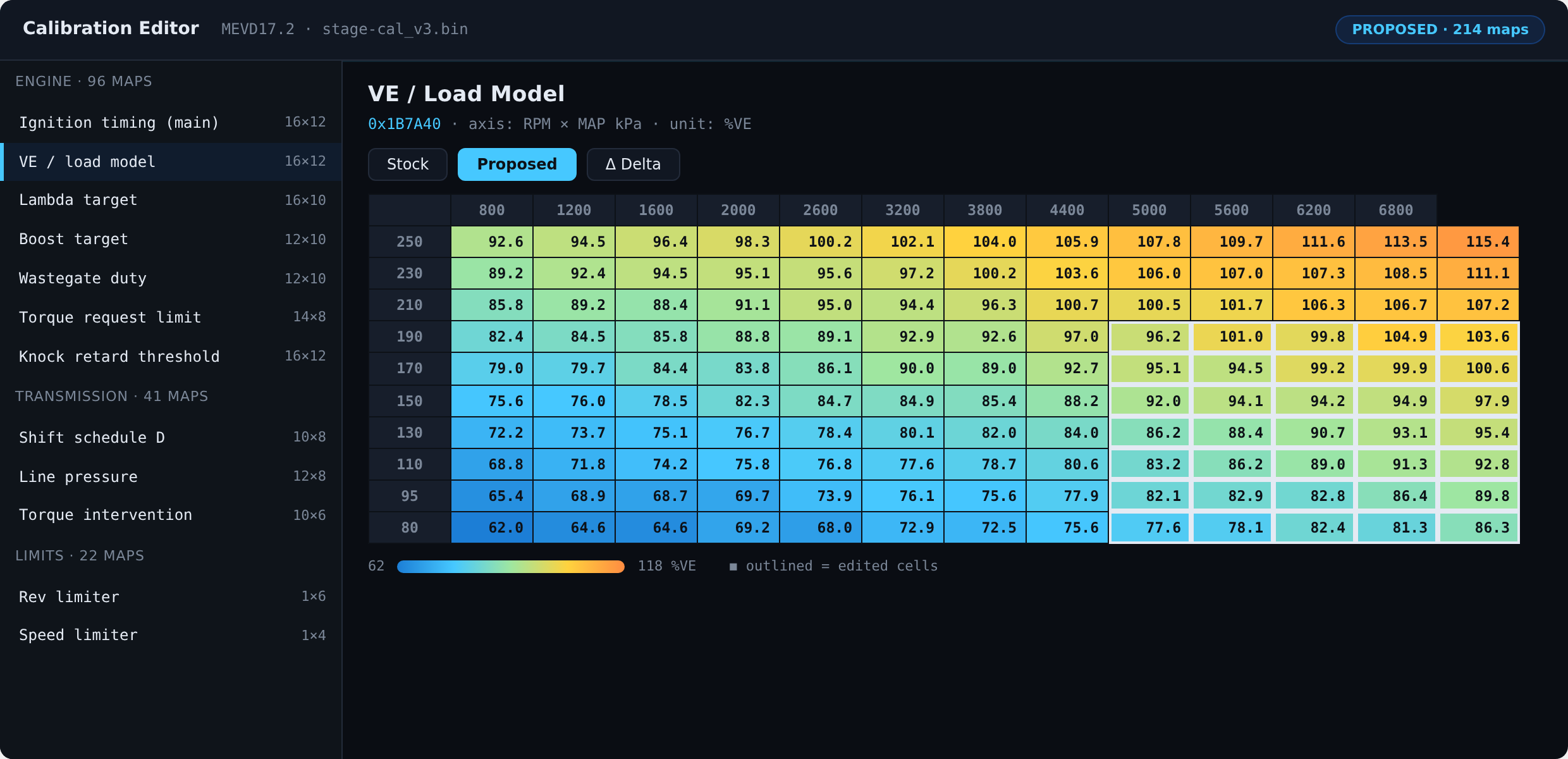
Planning more parts later? Tell us. A calibration can be revised when the next stage goes on — that’s normal, not starting over.
If your combination isn’t here, that changes nothing — the process is the same: tell us exactly what’s on the machine, and the calibration gets built for it.
We’re tuning-only — no installs or wrench work. We work with your installer: they hang the parts, we calibrate the result. It’s a clean split that serves you better on both ends.
“Runs fine” and “runs right” are different. Without a matching calibration the ECU is compensating — often with hidden costs in timing, fueling, or long-term adaptation. A datalog tells the truth; we can show you exactly what yours is doing.
Yes — E85 and flex-fuel calibrations are regular work here. Fuel-system capacity has to support it; we’ll tell you if yours doesn’t.
A canned file is a guess about your machine made without ever seeing it. Sometimes the guess is close. A custom calibration is measured against your actual engine on the road — that’s the difference we’re named after: a dynamic tune, not a static file.
Keep reading: What a tune actually does · Rough running after parts? · Can we tune yours? · All guides